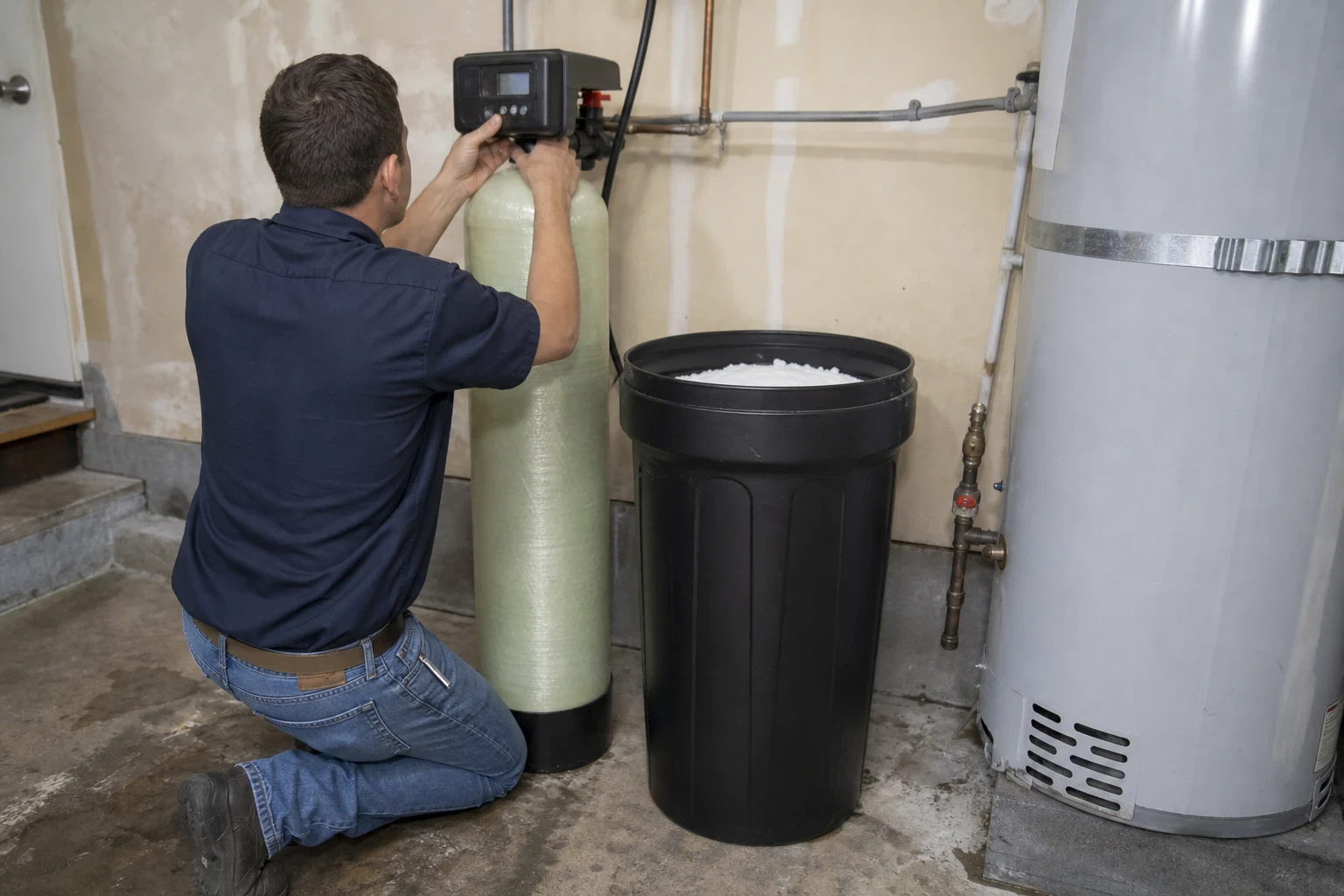
ServicesWater softeners
Water Softeners in Irving, After a Hardness Test
A softener can end spotty dishes, crusty faucets and scale in your water heater. It can also be money spent on a problem you don't have. We measure your water's hardness first, then tell you plainly whether a softener earns its keep in your home.
A softener should answer a number, not a sales pitch
Hard water carries dissolved calcium and magnesium. Heat drives those minerals out of the water, so they build up as scale inside water heaters, on shower glass and around faucet aerators. A softener swaps those minerals out through a resin bed, then rinses itself with brine on a schedule.
Hardness varies from one supply to the next, and how much it bothers you depends on your fixtures, your appliances and how many people live in your home. That's why we test before we quote. If your reading is moderate and the only complaint is taste or chlorine smell, a softener won't fix that, and we'll point you toward whole-house carbon filtration or under-sink reverse osmosis instead.
When a softener does make sense, we look past the sticker. A unit that costs a little more but regenerates by actual water use often burns less salt and water over ten years than a cheaper timer model.
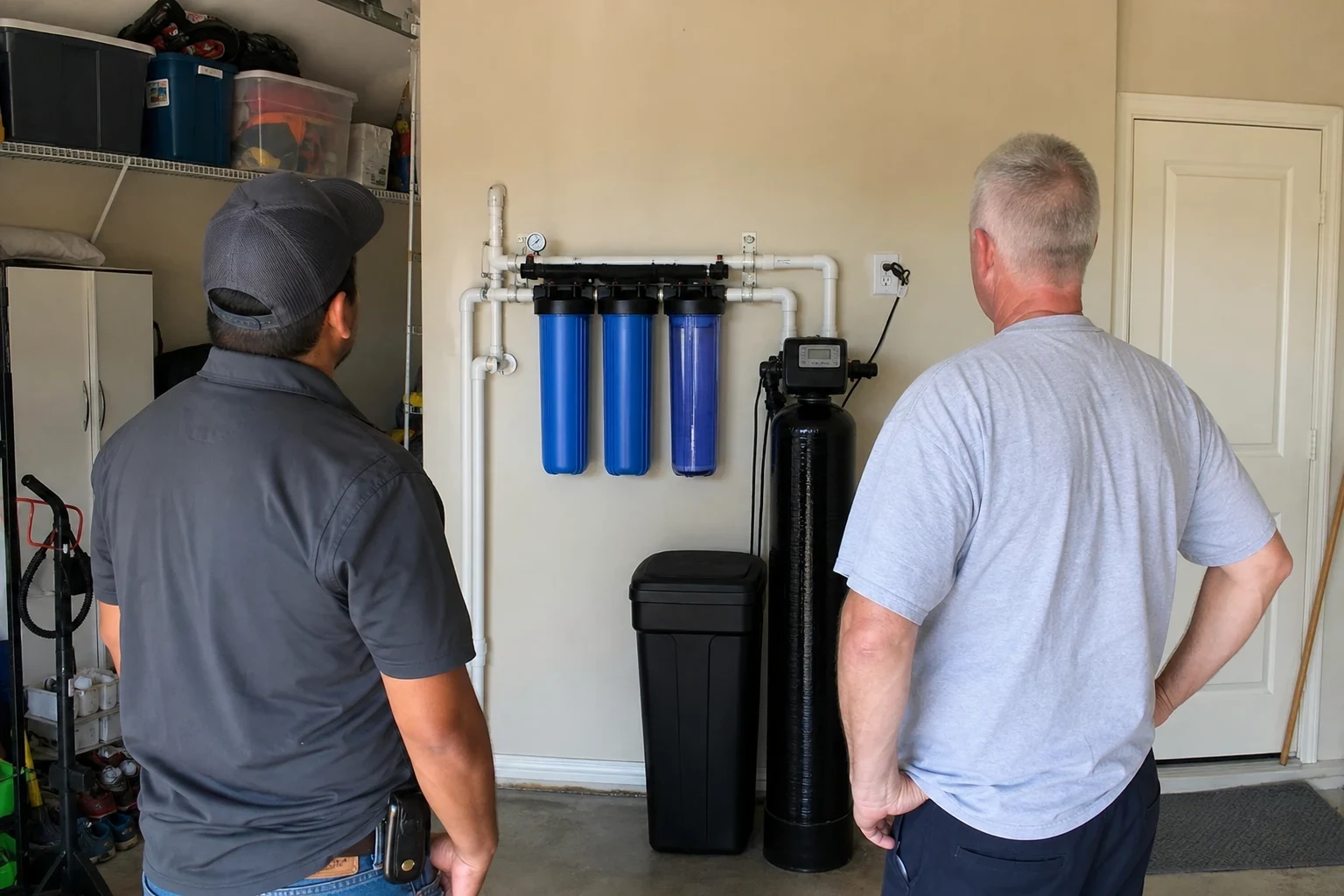
What our softener service covers
- 01
Hardness and iron reading
We test hardness in grains per gallon at your tap, and check for iron, which can foul a resin bed. The numbers decide the size of the unit, or whether you need one at all.
- 02
Sizing to your household
We match resin capacity to your hardness and daily water use. An undersized tank regenerates too often and wastes salt. An oversized one costs more up front for no gain.
- 03
Installation at the main line
We install the softener where your water enters the house, with a bypass valve so you can isolate it for service. We route the drain line and set up the brine tank in your garage or utility area.
- 04
Programming and a walkthrough
We set the regeneration schedule and hardness setting from your test, then show you how to add salt, check the level and use the bypass.
- 05
A plain cost-of-ownership estimate
Your written estimate lists the equipment, the installation and the expected yearly salt and upkeep, so you can compare options over their full life.
Questions about Water softeners?
Call(972) 945-8770Signs hard water may be costing you
White crust on faucets and showerheads
Chalky buildup that returns weeks after cleaning is mineral scale. It narrows aerators and showerhead holes over time.
Spotty dishes and cloudy glassware
If rinse aid barely helps, minerals may be drying onto everything the dishwasher touches.
A water heater that pops or rumbles
Mineral scale collects in a layer on the floor of the tank. When the burner fires, trapped water under that crust crackles and knocks as it heats. The heater also has to run longer to give you the same amount of hot water.
Soap that won't lather
Hard water reacts with soap and shampoo, so you use more and still feel a film on skin and hair.
Appliances wearing out early
Scale clogs valves in washers, ice makers and coffee machines. A test tells you whether hardness is the cause or something else is.
How a softener job runs
- 1
Test and talk
We test your water and go over the results with you at the kitchen table. If a softener isn't the right call, we say so and explain what would help.
- 2
Written estimate
You get a line-item estimate with the unit, parts, labor and expected ongoing costs. Take your time deciding.
- 3
Install day
We shut off the water briefly, cut in at the main line, add the bypass and drain, and lay down drop cloths where we work. Most homes are back on water within a few hours.
- 4
Startup and check
We fill the resin tank, run a first regeneration and retest the water at a tap to confirm the softener is doing its job. Then we clean up and walk you through the controls.
What moves the cost of a softener
The price depends on what your test shows and how your plumbing is laid out. We spell out both the up-front cost and what you'll spend each year to keep it running, because the cheapest unit to buy is not always the cheapest to own.
- Your hardness and water use
- The more minerals in each gallon, and the more showers and laundry loads your family runs, the more resin it takes to keep up between regenerations. That points to a larger unit and a higher equipment line on the estimate.
- Metered versus timer control
- Demand-metered valves cost more up front but regenerate only when needed. That usually means less salt and less wastewater year after year.
- Plumbing access
- An easy-to-reach main line with a nearby drain keeps labor down. Extra piping runs or a missing drain add time and parts.
- Iron or silt in your sample
- Iron coats resin beads and slowly cuts how much hardness a softener can handle. When your test turns up iron or fine silt, we may suggest a separate filter installed ahead of the softener so the resin lasts longer. That work falls under our iron and sediment filtration service and shows up as its own line on the estimate.
Water softener questions
Do I really need a softener in Irving?
Not always. Hardness differs by supply and by what bothers you at home. That's exactly why we test first. If your reading is low or moderate, we'll tell you a softener isn't worth the money.
Will a softener make my water taste better?
Usually not. A softener removes hardness minerals, not chlorine or taste. For drinking water flavor, under-sink reverse osmosis or whole-house carbon filtration is the better tool, and some homes pair one with a softener.
How much upkeep does a softener need?
Mostly adding salt to the brine tank when it runs low, and an occasional check of the settings. Resin beds last many years with clean water ahead of them. Our filter replacement and maintenance service can handle periodic checkups if you'd rather not.
Does softened water add sodium?
A small amount, which rises with your water's starting hardness. If that's a concern, potassium chloride can replace salt, or you can drink from a reverse osmosis tap.
Can you work on a softener I already own?
Yes. We can retest your water, check the settings and tell you honestly whether a tune-up makes sense or the unit is past its useful life.
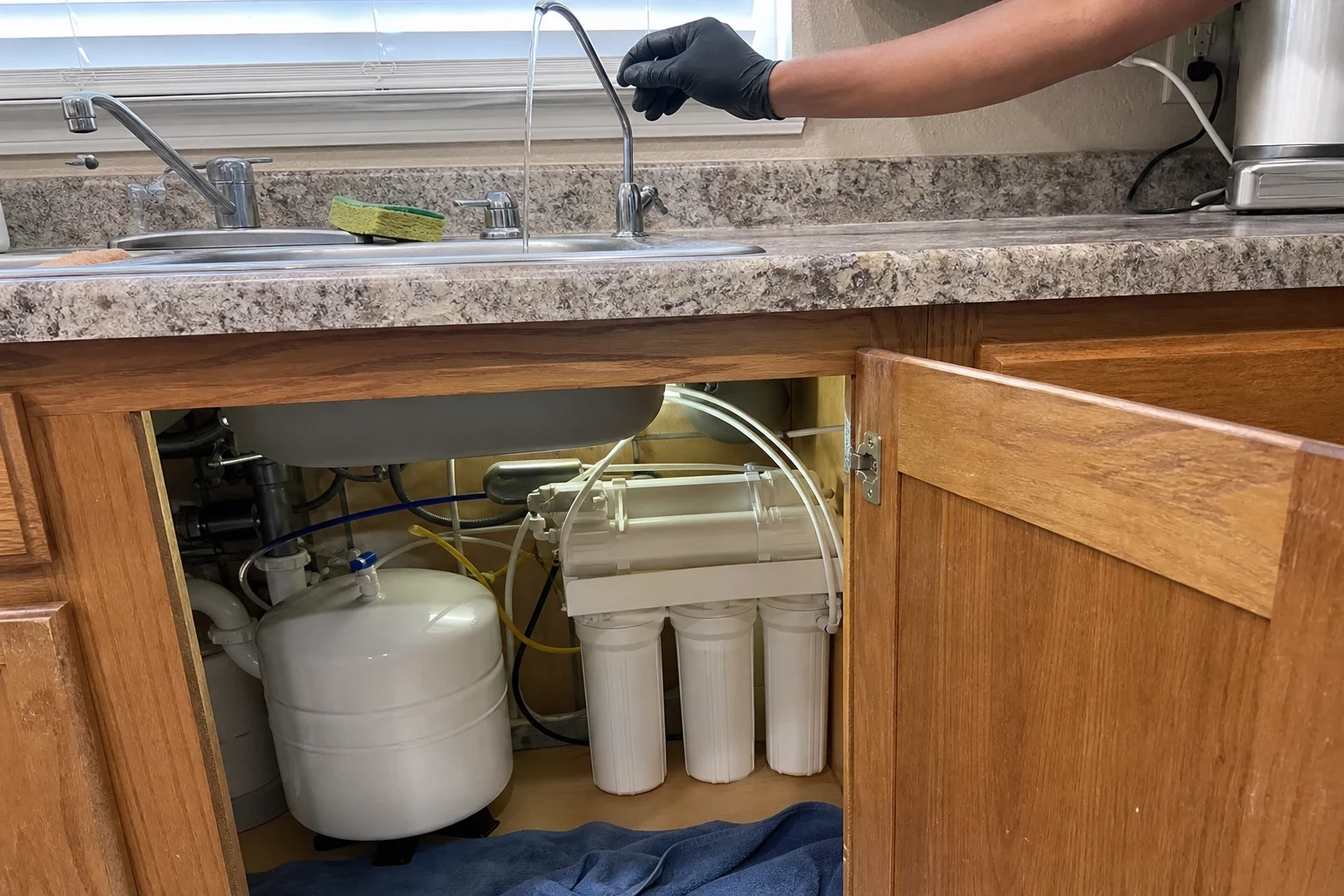
Find out if a softener is worth it for your home
One hardness test answers the question. We'll share the numbers, your options and the long-term costs, then let you decide.