ServicesIron and sediment filtration
Iron and Sediment Filtration in Irving
Rusty stains in the toilet, grit in your faucet screens and laundry that never looks quite white usually trace back to iron or sediment. We test first, then fit a filter that solves the problem without signing you up for upkeep you don't need.
What iron and sediment filtration does for your home
Sediment is the sand, rust flakes and grit that ride along in your water. Iron is a dissolved metal that turns orange or brown once it meets air. Both are different problems, and they need different equipment, so we start by finding out which one you actually have.
In many Irving homes, the source isn't the water supply at all. Older galvanized pipes shed rust from the inside, and water main work in the area can stir up sediment for days. A test tells us whether you need a simple sediment screen, a cartridge housing or a backwashing iron filter.
We'll show you what each option costs to buy and what it costs to keep running. A cheap cartridge that needs changing every month can end up costing more over five years than a larger system that mostly takes care of itself.
What the work includes
- Water test before any recommendation
- We check iron levels and look at whether it's clear-water iron (dissolved) or red-water iron (already rusted). That answer decides which filter will work. If you'd like a deeper lab panel, our water testing service covers it.
- Spin-down sediment screens
- A reusable screen that catches sand and grit at the main line. You flush it by opening a valve, so there are no cartridges to buy.
- Cartridge sediment housings
- Pleated or spun cartridges that trap finer particles. We pick a micron rating that catches what's in your water without choking your water pressure.
- Backwashing iron filters
- Oxidizing media or air-injection systems that turn dissolved iron into particles and trap them. The tank cleans itself on a timer and sends the iron to a drain, so upkeep stays low for years.
- Bypass valve and pressure gauges
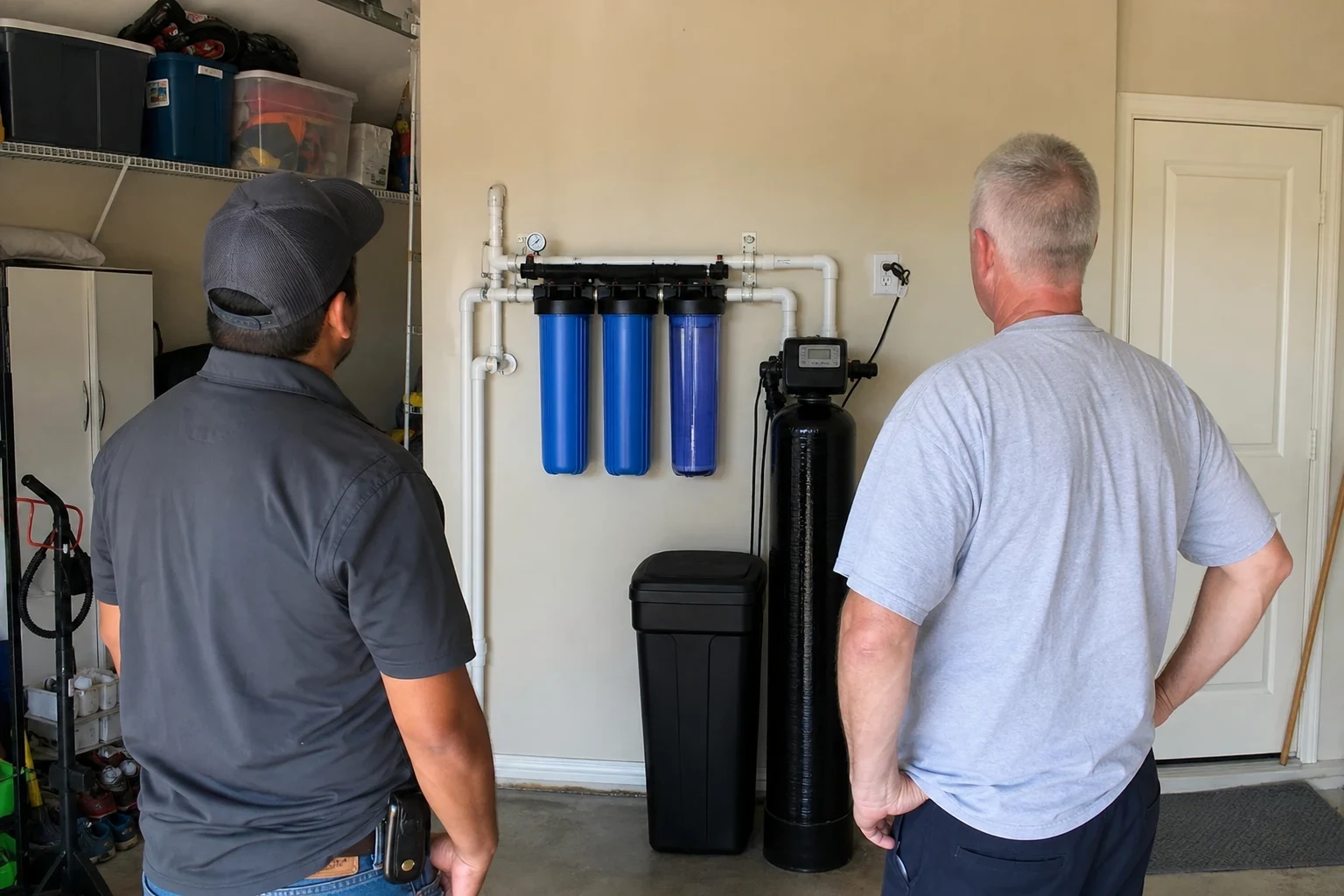
- Every install gets a bypass so you keep water during service. Gauges before and after the filter show at a glance when a cartridge is due.
Clues your water is carrying rust or grit
Rust-colored rings that keep returning
You scrub the toilet bowl or the tub, and a reddish tint creeps back within days. Streaks below the faucet spout are another giveaway. That pattern almost always means iron.
Sand in the faucet screens
Twist off a kitchen or bathroom aerator. Tiny grains or dark specks caught in the mesh tell you particles are traveling through the plumbing.
Whites that drift toward tan
Towels and shirts lose their brightness wash after wash. Iron bonds with fabric in the machine, and chlorine bleach tends to lock the color in.
A tinny taste or a hazy glass
Coffee that tastes faintly of metal, or tap water that looks cloudy and then settles, can point to dissolved iron or fine suspended particles.
Small repairs that never stop
Abrasive grit chews up the seals in toilet fill valves, dishwasher inlets and water heater drain valves. If you're replacing those parts often, sediment may be the real culprit.
What happens from first visit to hand-off
- 1
A look at your water together
On the first visit we check iron and sediment right at your kitchen tap and walk you through what the numbers mean. Each option comes with its purchase price and its yearly running cost listed next to each other.
- 2
Matching the filter to your use
Flow rate matters, so we size the system to how much water your household draws at once, keeping showers strong. When a basic cartridge housing is enough, that's what we recommend.
- 3
The install itself
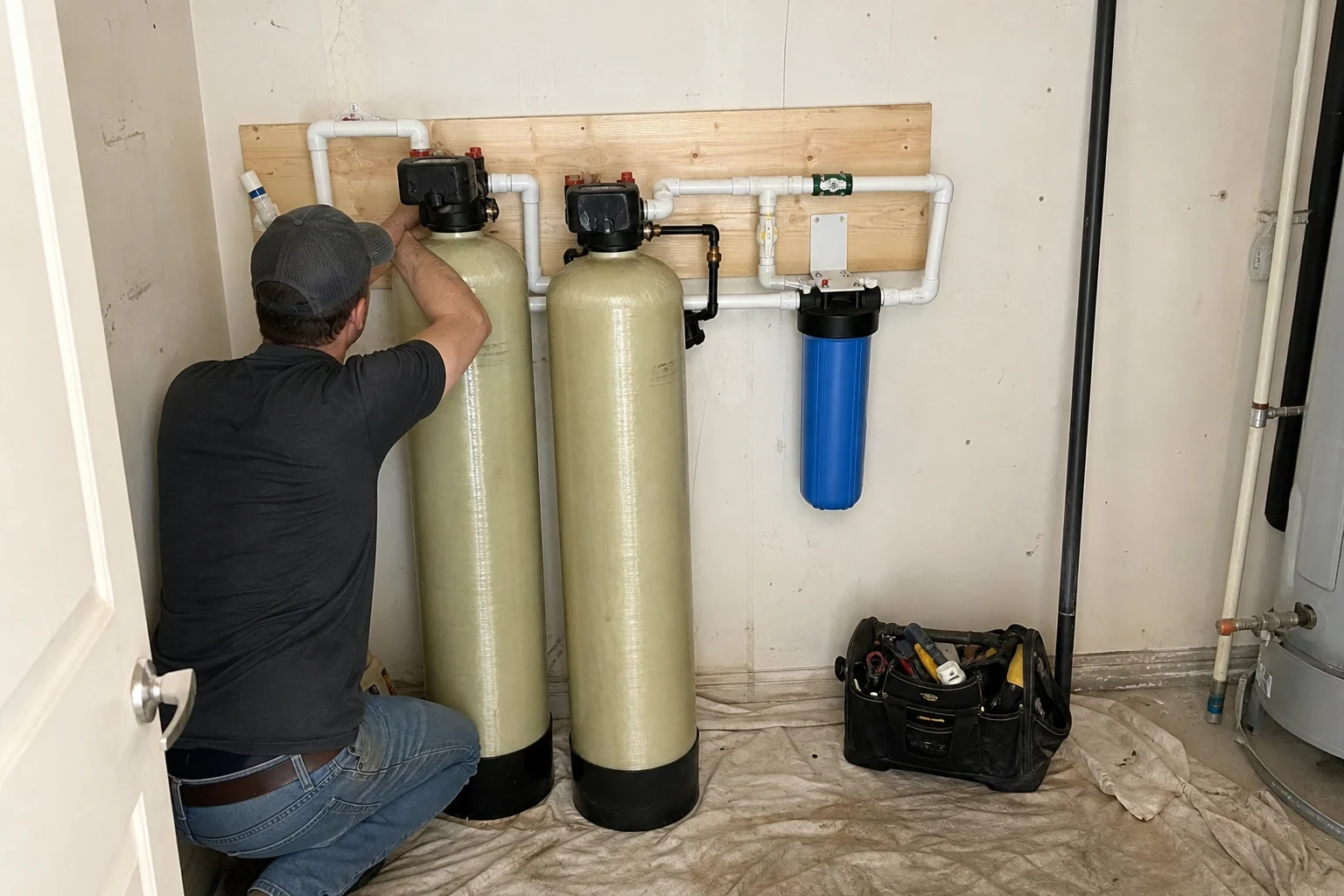
With the water off and the floor covered, we cut the filter in close to your main line, often in the garage. A backwashing tank needs a drain and an outlet within reach, and we confirm both before the day. Expect a few hours of work.
- 4
Showing you the system
Before we leave, you'll know where the bypass handle sits, how to read the two gauges and how to flush a spin-down screen on your own. We also jot down about when the next cartridge swap or service check is likely, so the timing never surprises you.
What moves the price
There's no single price for iron and sediment filtration because the right setup depends on what's in your water. We give you a written estimate after the test, with the install cost and the ongoing cost listed separately so you can compare options fairly.
- Type of system
- A spin-down screen or single cartridge housing costs far less up front than a backwashing iron tank. The tank, though, can run for years with little more than an occasional check.
- How much iron, and what kind
- Light sediment needs only a screen. Higher iron levels, or iron bacteria, call for oxidizing media and sometimes a pre-treatment step.
- Plumbing and drain access
- A main line that's easy to reach keeps labor down. If a backwashing filter needs a new drain line or outlet, that adds to the job.
- Long-term upkeep
- Cartridges get replaced, media gets refreshed every several years. We price those out so the cheaper option today doesn't become the expensive one later.
Common questions on rust and grit filtration
Something not covered here? (972) 945-8770
Do the stains I already have disappear once the filter goes in?
Not by themselves. The filter keeps fresh iron away from your sinks, tubs and toilets, but the marks already there need a cleaner made for rust. After one good cleaning, they should stay gone. Laundry usually starts looking brighter after a handful of loads.
Can a water softener take care of iron?
A softener can handle a small amount of dissolved iron, but iron fouls the resin over time and shortens its life. For noticeable iron, a dedicated filter usually costs less to keep running. If your hardness test also supports a softener, we'll explain how the two can work together.
How long does a sediment cartridge last between swaps?
That comes down to the amount of grit in your supply. A light load can let one cartridge run for several months, while a heavy one may clog it in a few weeks. Watch the two gauges: when the gap between them widens, a fresh cartridge is due. Our filter replacement and maintenance service can take that chore off your list.
Will a filter lower my water pressure?
A properly sized filter shouldn't cause a noticeable drop. Pressure falls when a cartridge clogs, which is your cue to change it. Undersized systems are the usual cause of weak showers, so we size for your home's actual use.
Do I need this if my rust only shows up sometimes?
Occasional rust after city line work often clears on its own, and a simple sediment screen may be all you need. If it keeps showing up, the cause may be aging pipes in your home. A test helps us tell the difference before you spend anything.
Find out what's behind the rust and grit
We'll test your water, show you which filter fits and what it costs to own over the years. Then you decide.