ServicesFilter replacement and maintenance
Filter Replacement and Maintenance in Irving
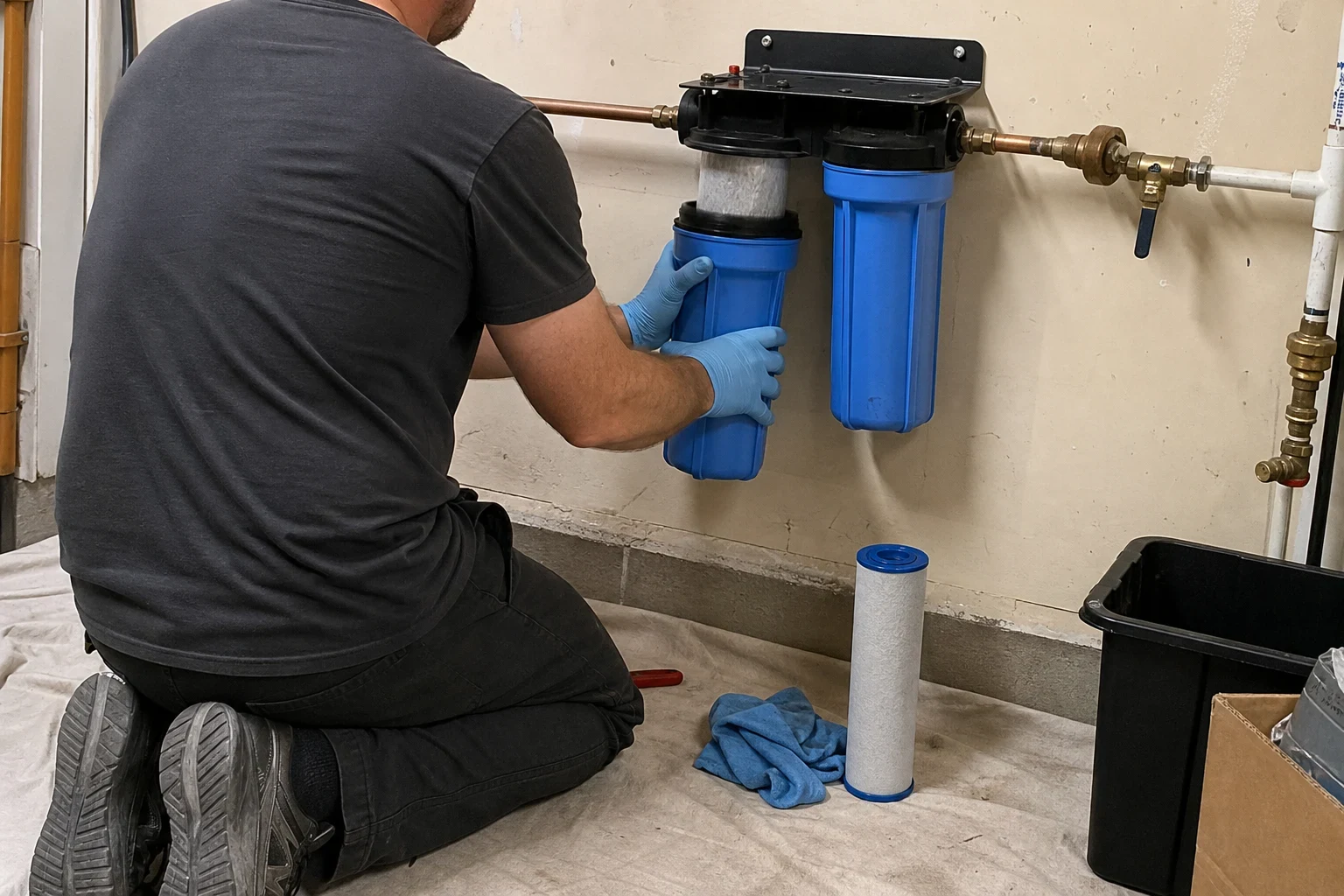
A filter only works as long as its cartridge does. We change sediment, carbon and reverse osmosis filters on a sensible schedule, check the parts that wear out quietly, and tell you plainly what your system needs next so it keeps paying for itself.
Keeping the system you already own working
Most filtration problems we see are not broken equipment. They are cartridges left in too long. A carbon filter that has used up its capacity stops removing chlorine taste. A sediment filter packed with grit chokes your water pressure. An exhausted carbon prefilter in a reverse osmosis unit lets chlorine reach the membrane, and that turns a modest cartridge change into a membrane replacement.
That is why we look at upkeep as part of what a system really costs. Replacing filters on time is the cheaper path over the life of the equipment, and it keeps the water tasting the way it did the week it was installed. We service the systems we install and most standard units from other companies too.
What a maintenance visit covers
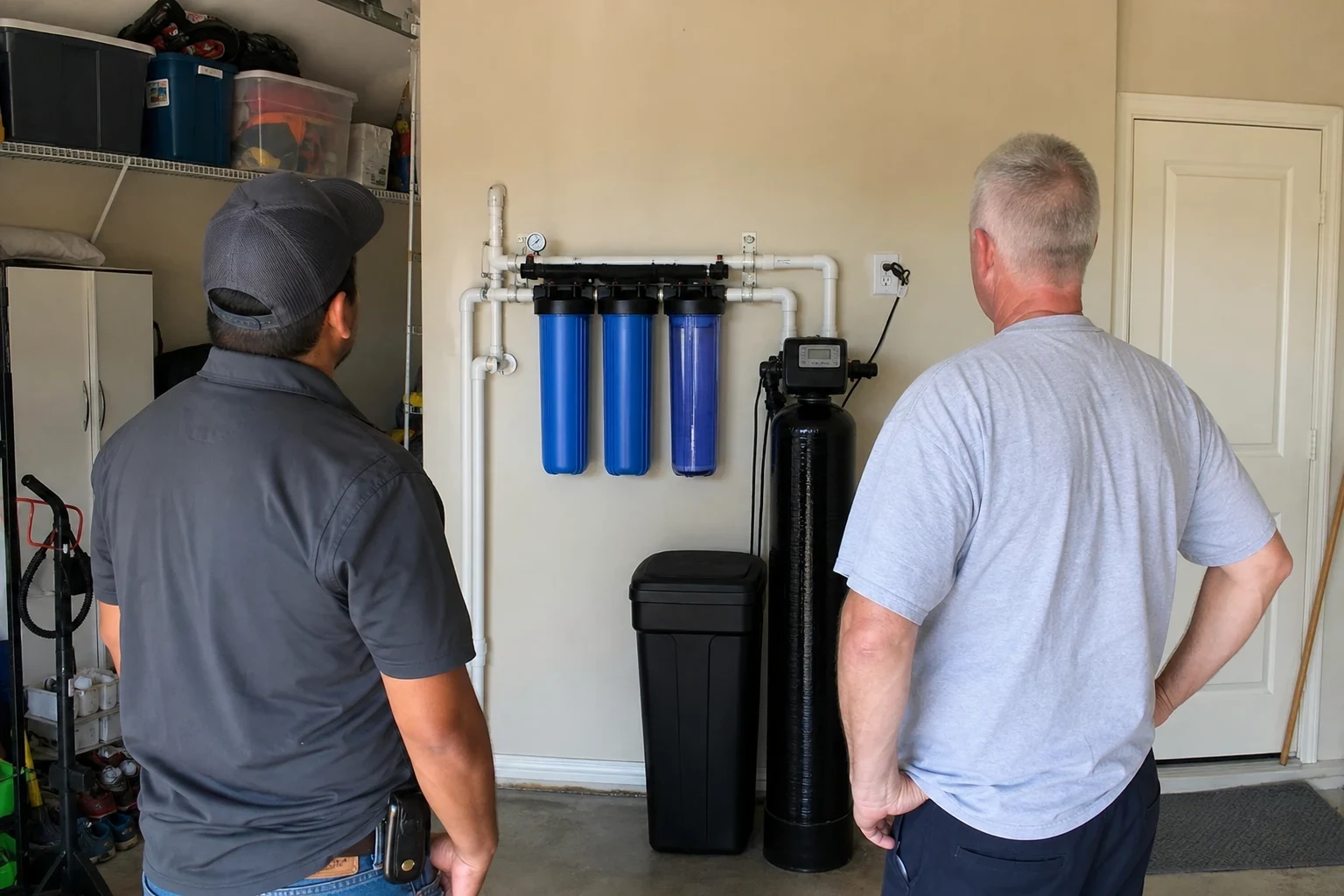
- 01
Whole-house cartridge changes
We swap sediment and carbon cartridges, clean the housings, and replace or lubricate the O-rings so the canisters seal without leaking.
- 02
Reverse osmosis service
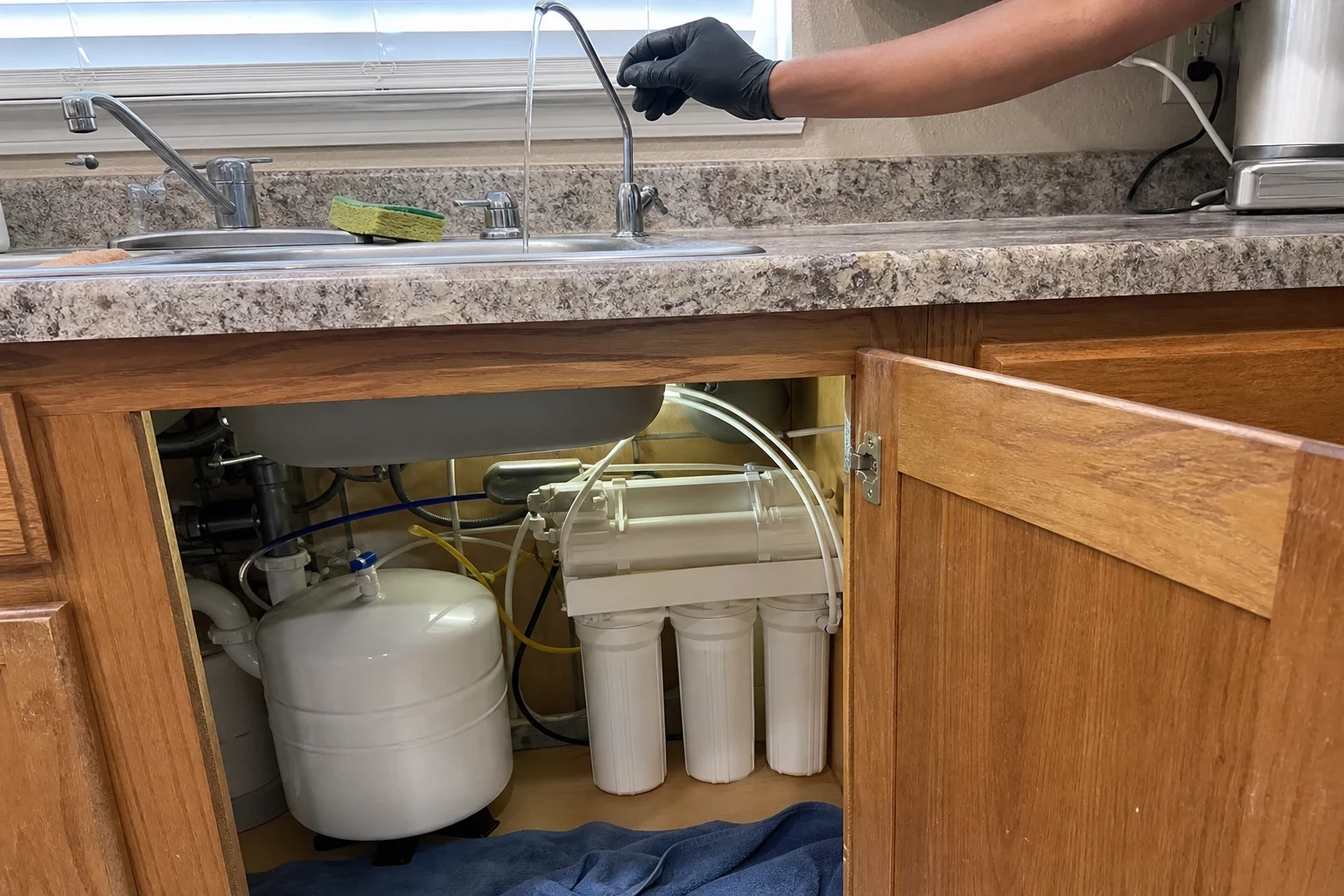
Under-sink units get new prefilters and a postfilter. We measure TDS before and after the swap, and comparing those two numbers shows how much useful life the membrane has left.
- 03
Sanitizing
When we open up a reverse osmosis system, we sanitize the lines and storage tank before putting it back together.
- 04
Pressure and leak checks
We note water pressure before and after the change and check every fitting once the system is back on. A slow drip under a sink is easy to miss until the cabinet floor swells.
- 05
Softener and iron filter checks
For softeners and iron filters, we look at salt levels, regeneration settings and signs of wear, and tell you if anything is close to needing attention.
- 06
A written record
Before we leave, you get a short note listing the parts we swapped, the pressure and TDS numbers we saw, and the date your next service comes due. Nobody has to guess later.
Questions about Filter replacement and maintenance?
Call(972) 945-8770Signs your filters are overdue
Pressure has dropped
If showers feel weaker than they used to, a clogged sediment or whole-house cartridge is a common cause.
The chlorine taste is back
When carbon runs out of capacity, the taste and smell return gradually. Many people notice it in coffee or ice first.
The RO faucet slows to a trickle
Worn prefilters or a fouled membrane make the storage tank fill slowly, so you run out of drinking water halfway through a pitcher.
Stains are returning
Orange or brown marks coming back on fixtures can mean an iron or sediment filter is saturated.
You can't remember the last change
If no one knows the date, it is probably past due. We start a record so this never happens again.
How a filter service visit runs
- 1
A quick call first
Tell us what systems you have and roughly how old they are. If you know the brand or can read the model off the housing, that helps us bring the right cartridges.
- 2
Check before we change
We look at the equipment, take pressure and TDS readings, and show you what the old filters look like. That tells you how hard they were working.
- 3
Replace and test
Water is off for a short stretch while we change cartridges, sanitize where needed and refill. We run the system, purge the air and check for leaks before we pack up.
- 4
Your next date
We clean up, label the housings with the change date and leave a written schedule based on your water use.
What affects the cost of maintenance
Filter service is usually a small, predictable expense, and we explain the price by phone before we come out. Waiting too long is what makes it bigger. Here is what moves the number.
- Type and number of systems
- One under-sink unit means a shorter visit and a smaller parts list. A whole-house filter paired with a reverse osmosis system takes more of both.
- Cartridge type
- Standard-size cartridges cost less to replace than brand-specific ones. If your system uses proprietary filters, we'll tell you that up front.
- How overdue the filters are
- On-time changes usually mean cartridges only. Long-neglected systems may need a new membrane, housings or O-rings.
- Your water use
- A bigger household runs more water through the filters, so changes come around more often. In hot Texas summers, extra irrigation and showers can shorten whole-house cartridge life too.
Filter maintenance questions
How often should my filters be changed?
The answer varies with the kind of equipment you have and the volume of water your household runs through it. Most sediment and carbon prefilters wear out somewhere between six months and a year, while reverse osmosis membranes tend to outlast them by a good margin. We set your schedule from the readings we take rather than a one-size rule.
Can I change the filters myself?
Often, yes, and we're happy to show you how. Many people still have us handle reverse osmosis service because sanitizing and judging the membrane takes some care. A periodic visit is also a good chance to catch worn O-rings or a slow leak.
Do you service systems another company installed?
Yes, for most standard systems. If the unit uses hard-to-find proprietary cartridges, we'll tell you before the visit and talk through your options.
What if my reverse osmosis membrane is worn out?
We'll show you the TDS reading and explain what it means. If the membrane is near the end, we'll give you the cost to replace it and let you decide. Sometimes new prefilters are enough for now.
Will my water be off for long?
Only for the time it takes to change cartridges and refill the housings. We protect the area under your sink or around the equipment and clean up before we leave.
Keep your filtration doing its job
Let us know what equipment you have and roughly when anyone last opened it up. We'll arrive with matching cartridges and leave you a clear plan for the months ahead.